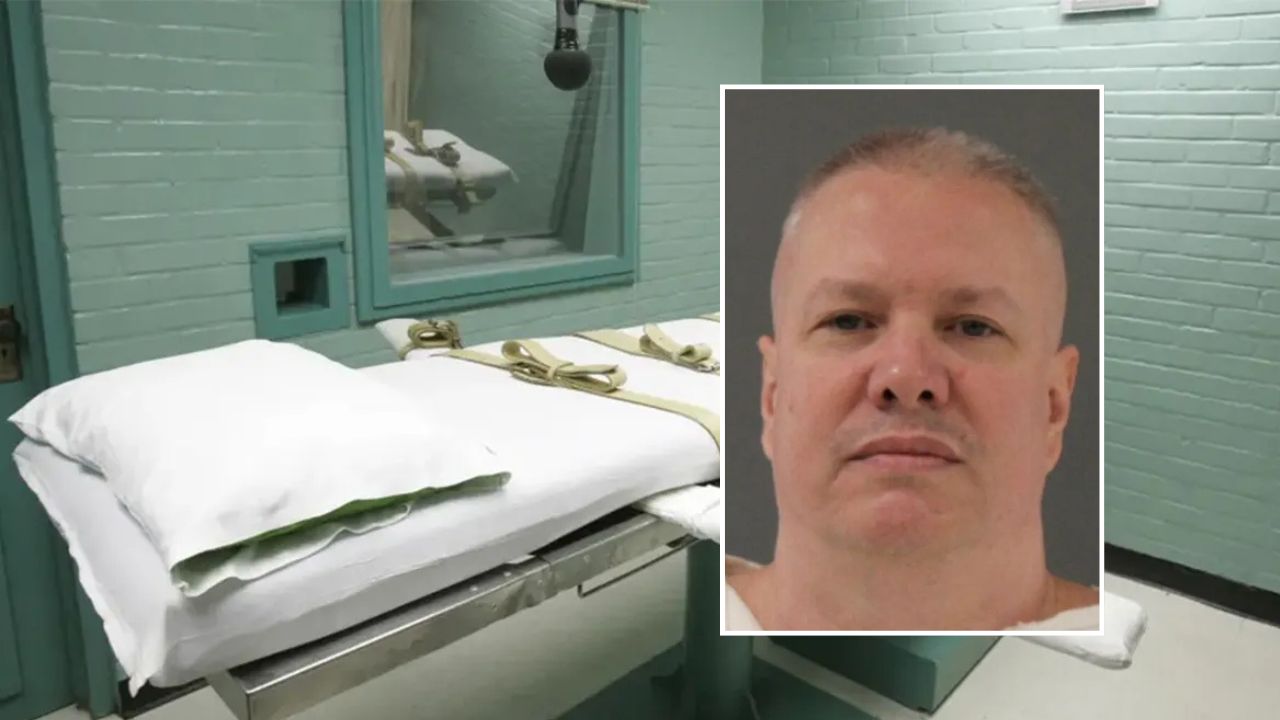
Huntsville, Texas — A Texas death row inmate convicted of murdering his former girlfriend and her new boyfriend was executed Wednesday evening, becoming the first person put to death in the United States in 2026, according to state officials.
Charles Victor Thompson, 55, was pronounced dead at 6:50 p.m. after receiving a lethal injection at the Huntsville Unit of the Texas Department of Criminal Justice. Thompson was convicted in the 1998 shootings of Glenda Dennise Hayslip, 39, and Darren Keith Cain, 30, a crime that unfolded after a bitter breakup and a confrontation fueled by jealousy.
Moments before the execution, Thompson addressed the families of his victims, offering an apology and asking for forgiveness.
“There are no winners in this situation,” Thompson said after a spiritual adviser prayed with him. “I’m sorry for what I did. I hope you can begin to heal and move past this.”
What Led to the Murders
Court records show the killings occurred in April 1998 at Hayslip’s apartment in the Houston area. Thompson, who had previously dated Hayslip, arrived at the residence around 3 a.m., where he encountered Cain, her new boyfriend.
An argument broke out, prompting police to respond. Officers ordered Thompson to leave the apartment complex. However, about three hours later, he returned armed with a gun.
Prosecutors said Thompson opened fire, killing Cain at the scene. Hayslip was critically wounded and died a week later from her injuries.
The case became one of Harris County’s most closely watched domestic violence-related murder prosecutions, highlighting the deadly risks associated with stalking and unresolved relationship conflicts.
A Long and Complicated Legal Path
Thompson was initially sentenced to death, but that sentence was later overturned on appeal. In 2005, following a new punishment trial, a jury again sentenced him to die by lethal injection.
Not long after being resentenced, Thompson made headlines once again — this time for escaping from the Harris County Jail. He remained on the run for three days before being captured in Louisiana.
Authorities said Thompson was arrested while attempting to arrange overseas wire transfers, allegedly as part of a plan to flee to Canada.
Despite years of appeals, courts ultimately upheld his conviction and sentence.
Key developments before the execution included:
- Texas Board of Pardons and Paroles denied clemency
- U.S. Supreme Court rejected a final appeal less than an hour before the execution
- No stays of execution were issued
Thompson’s Final Moments
As the lethal injection was administered, witnesses reported that Thompson appeared calm but gasped loudly as the drugs took effect. According to media witnesses, he took several labored breaths before becoming still.
His final statement included religious references and an expression of remorse.
“I’m sorry for what happened. I love you all,” Thompson said. “Keep Jesus in your life. Keep Jesus first.”
Approximately 22 minutes later, he was pronounced dead.
Reaction from Victims’ Families and Prosecutors
After witnessing the execution, Dennis Cain, the father of victim Darren Cain, offered a blunt response.
“He’s in hell,” Cain said afterward.
Harris County District Attorney Sean Tear, whose office prosecuted the case, said the execution brought long-delayed closure.
“This chapter is closed,” Tear said. “It was justice a long time coming.”
Prosecutors emphasized that the case spanned nearly three decades, underscoring the emotional toll endured by the victims’ families.
Read Also: Holocaust Survivor and Service Dog Killed in Hit-and-Run Maserati Crash in Los Angeles
A Broader Conversation on Capital Punishment
Thompson’s execution reignites national debate over the death penalty, particularly in cases involving domestic violence and crimes of passion. Supporters argue the sentence delivered justice for the victims, while opponents question whether executions provide true closure.
Thompson himself acknowledged the broader impact in his final remarks, saying the process “creates more victims and traumatizes more people” even decades later.
As Texas continues to lead the nation in executions, the case serves as a reminder of how long capital punishment cases can linger — and how deeply they affect everyone involved.
Do you believe the death penalty brings closure for victims’ families, or does it prolong trauma? Share your thoughts in the comments below.