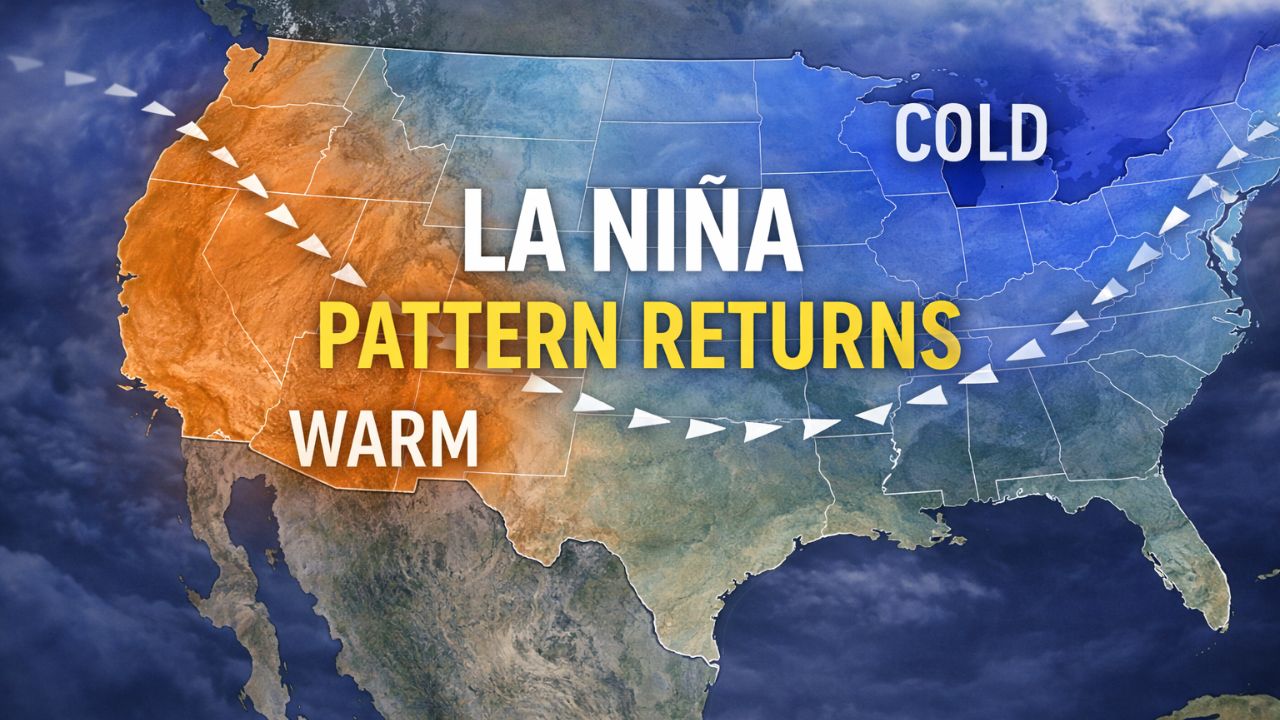
Washington, D.C. — As February arrives with Valentine’s season in full swing, the weather story across the United States is shaping up to be one of stark contrasts. Long-range outlooks suggest winter will remain firmly in control across northern states, while parts of the South and West could experience notably warmer, springlike conditions as the month unfolds.
Forecasters say February will largely continue the patterns established in recent weeks, with cold air lingering in the North, a milder trend in the Southwest, and clear differences in precipitation depending on location.
Cold Pattern Expected to Persist Across the Northern U.S.
Much of the northern tier of the country is forecast to remain colder than average throughout February, with the most pronounced cold centered on the Northeast and the Upper Midwest, including northern Michigan.
Typical February highs in these regions fall in the 20s and 30s, and forecasts indicate that temperatures will frequently stay within — or below — that range.
Residents across the North should not expect a meaningful break from winter, as repeated intrusions of cold air are likely to keep freezing conditions locked in.
These lower-than-average temperatures may lead to continued snow cover, icy roads, and higher heating demand, particularly in areas that have already experienced prolonged cold spells earlier this winter.
Southwest and Southern States Lean Warmer Than Normal
While the North stays cold, the southern tier of the U.S. is expected to trend in the opposite direction.
Forecast models point to above-average temperatures across much of the South, with the Southwest standing out as the warmest region relative to normal. Because elevation plays a major role, February highs in this region can vary widely — from the 30s in higher terrain to the 60s and 70s in desert locations.
Much of the West is expected to remain warmer than seasonal norms, a pattern that could limit snowfall at lower elevations.
This warmer outlook may be welcomed by residents but could pose challenges for winter recreation, particularly ski resorts that rely on sustained cold and snowfall.
Wet Weather Likely to Continue in the Northwest
Precipitation trends mirror the temperature divide.
The Pacific Northwest is forecast to experience a wetter-than-average February, consistent with its climatological wet season. Frequent storm systems are expected to bring rain to lower elevations and snow to higher terrain, supporting mountain snowpack while also increasing the risk of localized flooding.
Forecasters say the Northwest could see some of the highest precipitation anomalies in the country this month.
Farther east, parts of the northern Plains, Great Lakes, and Northeast may also see slightly above-average precipitation. With cold air in place, much of this moisture is expected to fall as snow rather than rain.
Drier Trend Emerging Along the Gulf Coast
In contrast, the Southeast — especially areas along the Gulf Coast — is forecast to trend drier than average during February.
While much of the country should see near-normal precipitation, this pocket of dryness could mean:
- Fewer widespread rain events
- Temporary relief from flooding concerns
- Increased attention to fire weather if dry conditions persist
Temperatures across the Southeast are expected to fluctuate, with occasional cold fronts still possible, but overall moisture levels may remain limited.
What This Means Heading Toward Spring
Taken together, February’s outlook suggests that winter is not done with the northern U.S., where cold and snow will remain dominant features of the weather pattern. Meanwhile, southern and western states may begin to feel hints of spring, though warmer conditions could come at the cost of reduced snowpack in parts of the West.
According to outlooks from the NOAA, these regional contrasts are being driven by large-scale atmospheric patterns that favor cold air retention in the North and warmth across the South and Southwest.
The bottom line: February will feel very different depending on where you live, with some areas stuck deep in winter while others edge closer to spring.
Do you think February will live up to this outlook where you are, or could winter still surprise us? Share what you’re expecting in your area in the comments below.