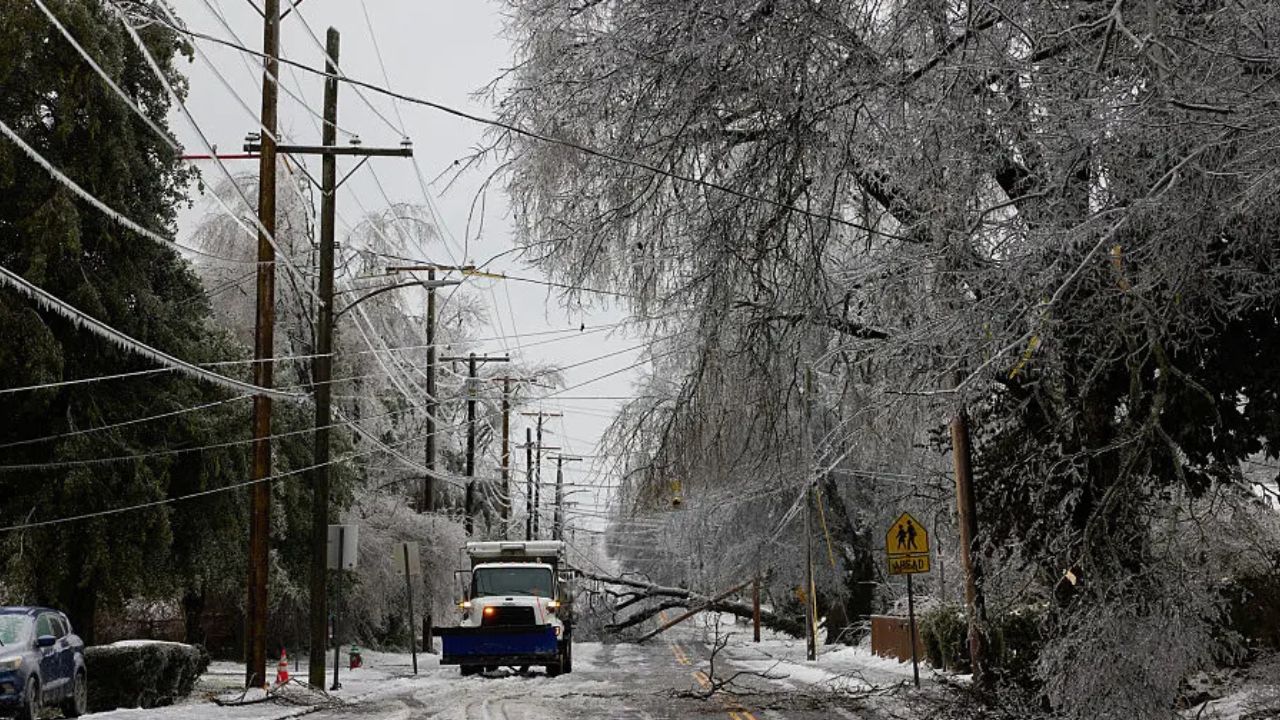
Dallas, Texas — A surge of wickedly cold Arctic air is spreading across much of the central and eastern United States, bringing the coldest temperatures of the winter to regions already facing the threat of widespread ice and power outages.
Meteorologists warn that the combination of severe cold, ice-covered infrastructure, and extended electricity loss could create life-threatening conditions from the Plains through the South and into the Mid-Atlantic over the coming days.
The expanding cold air mass is settling in behind a large winter storm system that has already produced snow and ice across wide portions of the country. In some areas, utilities are preparing for outages that could impact hundreds of thousands — potentially more than one million — customers from Texas to Virginia.
Bitter Cold Already Gripping The Plains And Upper Midwest
The Arctic outbreak has already delivered extreme conditions across the northern Plains and Upper Midwest.
Early Friday morning, temperatures plunged to 15 to 35 degrees below zero across parts of the Dakotas, Minnesota, and Wisconsin. Factoring in wind, conditions became even more dangerous.
In northern Minnesota, “feels-like” temperatures dropped as low as 70 degrees below zero, while parts of northern Wisconsin experienced wind chills between 40 and 60 below zero.
Forecasters say some of that same brutal cold will push farther south and east as the weekend unfolds.
“This is not a short-lived cold snap,” meteorologists warned. “The air mass is expansive and persistent.”
Dangerous Cold Expands South And East
While the cold will not reach the same extremes everywhere, temperatures across much of the central and eastern U.S. are expected to fall 20 to 40 degrees below historical averages.
In regions affected by snow and ice — stretching from Oklahoma, Kansas, and northern Texas into Pennsylvania, New York, and New England — daytime highs in the single digits and teens are expected to become widespread.
Even where temperatures briefly rise during the day, forecasters say any thawing will be limited, increasing the likelihood that moisture refreezes overnight.
Ice Storm Complicates The Threat
A temporary warming trend tied to the storm’s circulation may occur from Saturday into Sunday across parts of the Tennessee Valley, Southeast, and Mid-Atlantic. While this may allow temperatures to climb slightly, it also enables snow to transition into sleet or freezing rain.
Read Also: Winter Storm Warning Issued As 6–10 Inches Of Snow, Ice Threaten Washington, D.C. Area
That shift significantly increases the risk of ice accumulation on roads, trees, and power lines, worsening the danger.
Once the storm exits, the cold air behind it is expected to surge southward again, locking in ice and snow across large areas.
Power Outages Could Become Life-Threatening
Officials stress that the most dangerous scenario will occur in areas where power is lost for extended periods during the coldest conditions.
“Extended power outages during extreme cold could become life-threatening,” meteorologists said. “The size of the ice footprint means restoration crews may struggle to reach every affected area quickly.”
Many heating systems rely on electricity to function, even when powered by gas or oil. Heat pumps and electric baseboard systems will not operate at all without power, leaving homes vulnerable.
Frozen Pipes And Infrastructure Damage Likely
Prolonged subfreezing temperatures dramatically increase the risk of frozen and burst pipes, even in regions unaccustomed to deep cold.
Officials note that overhead sprinkler systems and exposed plumbing are especially vulnerable — a problem that caused widespread damage during a major ice storm and Arctic outbreak in February 2021.
Once pipes burst, water damage can become severe, particularly if power remains out and repairs are delayed.
Freezing Conditions To Linger For Days
From Texas through northern Georgia, the Carolinas, and Virginia, temperatures are expected to fall below freezing and remain there well into Monday, with only brief afternoon warmups possible next week.
Even then, temperatures may rise above freezing for just a few hours before dropping again after sunset.
This pattern means ice and snow cover will persist for several days, keeping roads slick and sidewalks hazardous long after precipitation ends.
“Where melting occurs during the day, refreezing at night is almost guaranteed,” forecasters said.
Officials Urge Immediate Preparation
Emergency managers are urging residents to prepare now, especially in areas at risk of power outages.
Key recommendations include:
- Protecting pipes by wrapping or allowing faucets to drip
- Stocking emergency supplies, including food, water, and batteries
- Charging devices ahead of time
- Checking on elderly neighbors and vulnerable individuals
- Using alternative heat sources safely
Officials stress that exposure to these conditions can lead to hypothermia and frostbite in minutes, particularly for those without reliable heat.
As this dangerous cold wave continues to spread, residents are encouraged to stay informed and limit unnecessary travel.
How cold is it where you live right now, and are you preparing for possible power outages? Share your experience and tips in the comments below.