Oklahoma City, Oklahoma — Florida has long been known as the lightning capital of the United States, but 2025 marked a major shift in that reputation. New data shows Oklahoma has overtaken Florida in a key weather statistic, recording the highest lightning density in the nation.
According to experts analyzing nationwide lightning data, Oklahoma logged about 73 lightning flashes per square mile in 2025, pushing it ahead of Florida, which has traditionally dominated the rankings for years.
Oklahoma tops lightning density rankings
The change appears to be tied to unusually active severe weather across Oklahoma last year. The state experienced above-average rainfall for several consecutive months, leading to more frequent thunderstorms — and more lightning.
“More thunderstorms means more lightning flashes,” said Elizabeth DiGangi, a lightning scientist with environmental consulting firm AEM.
Florida, by contrast, had a drier-than-average year and did not experience a single hurricane making landfall. That marked the first time in a decade the United States avoided a hurricane landfall altogether, contributing to lower lightning totals in the Sunshine State.
Is this a one-year anomaly?
Meteorologists are still debating whether Oklahoma’s lightning surge is a temporary shift or part of a larger trend.
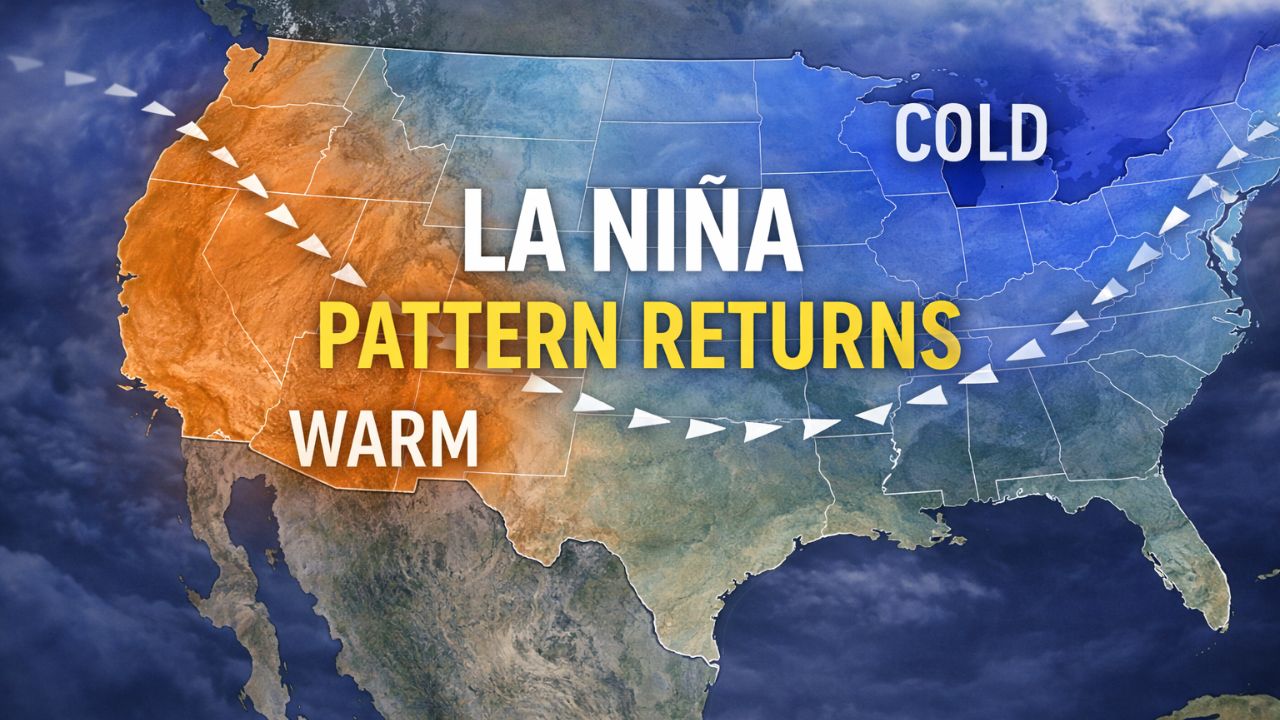
Some experts point to La Niña conditions, which can alter storm tracks and precipitation patterns across the central U.S. Others warn it could signal more intense and dangerous weather seasons ahead for Oklahoma — including stronger tornado outbreaks and larger hail events.
At this point, researchers say it’s too early to draw firm conclusions, but the data has caught the attention of weather scientists nationwide.
Where lightning was strongest in Oklahoma
Lightning activity wasn’t evenly spread across the state.
Kay County, located in northern Oklahoma, recorded the highest lightning density in the country, with 123.4 flashes per square mile. Other high-ranking counties were scattered across the Great Plains, reinforcing the region’s reputation for volatile weather.
Texas still leads in total lightning strikes
While Oklahoma claimed the top spot for lightning density, it did not surpass Texas in total lightning flashes.
Texas recorded more than 13 million lightning strikes in 2025, the highest total in the nation. As the largest state in the contiguous U.S., Texas has a natural advantage — with vast land area and frequent severe storms ranging from thunderstorms and hail to tornadoes.
How lightning forms
Lightning begins with static electricity inside a thunderstorm cloud. Turbulent winds cause tiny water droplets and ice crystals to collide, separating positive and negative electrical charges within the cloud.
The lower portion of the cloud typically becomes negatively charged, while positive charge builds elsewhere. When the electrical difference becomes strong enough to overcome air resistance, a lightning flash occurs.
Read Also: Scattered Storms Target North Texas Midweek as Much Cooler Air Moves Into DFW This Weekend
Lightning safety: what you should know
Experts stress that lightning remains a serious hazard, regardless of where you live.
If indoors:
- Avoid corded phones, computers, and plugged-in electronics
- Stay away from plumbing, including sinks, showers, and toilets
- Keep distance from windows, doors, and porches
- Do not lie on concrete floors or lean against concrete walls
If in a vehicle:
- Keep windows fully closed
- Avoid touching metal parts connected to the exterior
- Remain inside the vehicle until at least 30 minutes after the last thunder
If your vehicle is struck by lightning:
- Stay inside — the car acts as a protective Faraday cage
- Keep hands in your lap, away from metal surfaces
- Do not touch electronics
- Wait at least 30 minutes after thunder ends before exiting
A changing weather landscape
Oklahoma’s rise to the top of the lightning rankings highlights how weather patterns across the U.S. continue to shift, sometimes in unexpected ways. Whether this marks a long-term change or a temporary anomaly, experts say lightning awareness and safety remain critical nationwide.
Did Oklahoma’s new ranking surprise you, or have you noticed more intense storms where you live? Share your thoughts in the comments below.